Queer Places:
69 Rue de Courcelles, 75008 Paris, France
Casa Bibescu, Bulevardul Nicolae Romanescu 1A, Craiova 200738, Dolj County, Romania
13 Cheyne Walk, Chelsea, London SW3 5RA, United Kingdom
45 Quai de Bourbon, 75004 Paris, France
Cimetière du Père-Lachaise, Paris, Département de Paris, Île-de-France, France
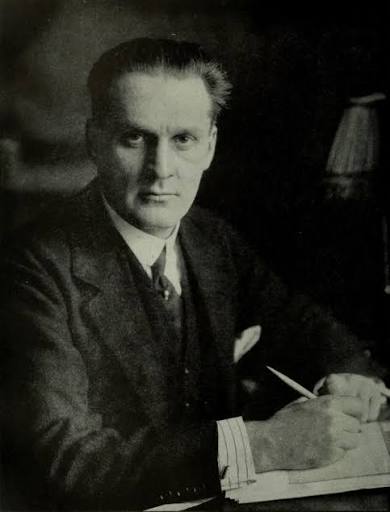 Prince Antoine Bibesco (July 20, 1878 – September 2, 1951) was born on July 20, 1878, in Saint-Symphorien, Indre-et-Loire, France, as the son of Prince
Alexandre Bibesco and Princess Hélène Kostaki-Epoureanu. Raised at 69 Rue de Courcelles in Paris, he grew up surrounded by high culture, as his mother
ran a celebrated artistic salon frequented by figures like Claude Debussy, Camille Saint-Saëns, Anatole
France, and Marcel Proust. Alongside his general education, Bibesco trained as a lawyer and managed his
family's estates in Craiova, Romania, throughout much of his adult life.
Prince Antoine Bibesco (July 20, 1878 – September 2, 1951) was born on July 20, 1878, in Saint-Symphorien, Indre-et-Loire, France, as the son of Prince
Alexandre Bibesco and Princess Hélène Kostaki-Epoureanu. Raised at 69 Rue de Courcelles in Paris, he grew up surrounded by high culture, as his mother
ran a celebrated artistic salon frequented by figures like Claude Debussy, Camille Saint-Saëns, Anatole
France, and Marcel Proust. Alongside his general education, Bibesco trained as a lawyer and managed his
family's estates in Craiova, Romania, throughout much of his adult life.
In addition to his administrative duties, Bibesco actively cultivated literary and artistic passions, establishing himself as a playwright and
translator. He wrote several French-language plays, achieving notable commercial success in the United States when his play Ladies All ran for 140
performances at the Morosco Theatre on Broadway in 1930. Bibesco also translated prominent contemporary English literature into French, including
Noël Coward's Hay Fever (as Weekend) and John Galsworthy's The Roof (as Le Domaine). Beyond his creative writing,
he served as a dedicated art patron, maintaining a close friendship with painter Édouard Vuillard and continuing his parents' tradition of commissioning
major contemporary works.
Bibesco pursued a prominent diplomatic career representing Romania on the global stage. He served early on as counsellor of the Romanian legations in
Paris and Petrograd, and by 1914, he had risen to First Secretary of the Romanian Legation in London. His diplomatic posts later took him across the
Atlantic and Europe, serving as Minister of the Romanian Legation in Washington, D.C., from 1920 to 1926—where he established the facility used today as
the official Embassy of Romania—and subsequently as Minister to Spain in Madrid from 1927 to 1931. In 1936, following a major political shakeup in
Romania that removed Foreign Minister Nicolae Titulescu, Prince Bibesco undertook the delicate diplomatic task of reassuring officials in Great Britain
and France that Romania remained committed to democratic principles rather than descending into fascism.
During his years in London, Bibesco mixed with high political society, entering the political circle of former Liberal Prime Minister H. H. Asquith.
While he originally carried on a romantic relationship with writer Enid Bagnold, his attention shifted to
Asquith's 21-year-old daughter, Elizabeth Asquith. Despite the twenty-year age gap, Elizabeth's mother,
Margot Asquith, strongly favored the match, viewing the aristocratic prince as a stabilizing presence. The
couple married on April 29, 1919, at St Margaret's, Westminster, in a major high-society wedding attended by royalty and cultural leaders like
George Bernard Shaw. The couple had one daughter, Priscilla, born in 1920.
Despite his marriage, Bibesco became infamous throughout European high society for his relentless heterosexual womanizing. Contemporary writer
Rebecca West, who had an affair with Bibesco in 1927, famously referred to him as a "boudoir athlete," recalling
an instance at the French embassy in London where virtually every woman in attendance had been one of his mistresses.
Antoine Bibesco's primary connections to LGBTQ+ history lie in his intimate involvement with queer cultural icons, most notably his deep lifelong
friendship with Marcel Proust. Meeting around 1899, Bibesco became one of Proust's closest confidants, dynamic outside sounding boards, and dedicated
literary champions. The pair used a private, affectionate code language where Proust called himself "Lecram" and referred to the Bibesco brothers as
"Ocsebib". Bibesco campaigned aggressively to get Proust's seminal masterpiece, Du côté de chez Swann, published by
André Gide at the Nouvelle Revue Française, and he served as a primary real-life model for Proust's character
Robert de Saint-Loup. Furthermore, Antoine's brother, Emmanuel Bibesco, was a gay man closely tied to
Proust's artistic circle. Antoine himself was famously comfortable navigating the heavily queer and bisexual intellectual salons of Belle Époque Paris
and Interwar Europe, later publishing Letters of Marcel Proust to Antoine Bibesco to document their literary collaboration.
The Second World War marked a devastating period for Bibesco, which he spent mostly in Romania. His wife Elizabeth died in Bucharest in 1945, and
shortly thereafter, the post-war communist regime confiscated the Bibesco family estates. Forced into exile, Bibesco fled Romania with the help of Enid
Bagnold, who quietly smuggled silver across the English Channel on his behalf. Bibesco spent his final years in exile in France and passed away on
September 2, 1951, at his home on 45 Quai Bourbon on the Île Saint-Louis in Paris. Enid Bagnold wrote in his Times obituary that Bibesco died harboring
three unclosable wounds in his heart: the losses of his mother, his brother Emmanuel, and his wife Elizabeth.
References:
- Bibesco, Antoine. Letters of Marcel Proust to Antoine Bibesco. Translated and introduced by Gerard Hopkins. London: Thames and Hudson, 1953. (Prince Antoine's own compilation of his decades-long correspondence with Marcel Proust, featuring introductory notes on their friendship, private code language, and Proust's creative process).
- Bagnold, Enid. Enid Bagnold’s Autobiography. London: Heinemann, 1968. (Details her early romance with Bibesco, their lifelong friendship, post-war encounters, and her obituary account of his final years).
- Asquith, Margot. Margot Asquith: An Autobiography. London: Thornton Butterworth, 1920–1922. (Provides commentary on Antoine's entry into the Asquith family circle and his 1919 marriage to Elizabeth Asquith).
- West, Rebecca. Selected Letters of Rebecca West. Edited by Bonnie Kime Scott. Yale University Press, 2000. (Contains West's personal reflections on her 1927 affair with Bibesco and his reputation in interwar Anglo-French society).
- The Kolb-Proust Archive for Research (University of Illinois at Urbana-Champaign). (Holds original manuscript correspondence, notes, and digital editions of letters between Marcel Proust and the Bibesco brothers).
- Archives de Paris (État civil & Registres de décès, 4ème Arrondissement). (Holds official vital records, including Bibesco’s 1951 death record at 45 Quai Bourbon).
- The National Archives (UK) & British Library Manuscript Collections. (Diplomatic correspondence and political records concerning Bibesco’s service at the Romanian Legation in London).
- Library of Congress & Diplomatic Archives of the Romanian Ministry of Foreign Affairs (MAE). (Records regarding Bibesco’s tenure as Minister Plenipotentiary in Washington, D.C. and Madrid).
- Tadié, Jean-Yves. Marcel Proust: A Life. Translated by Euan Cameron. New York: Viking, 2000. (Extensive biography covering the role of Prince Antoine and his brother Emmanuel within Proust's inner circle and as inspirations for characters in A la recherche du temps perdu).
- Carter, William C. Marcel Proust: A Life. Yale University Press, 2000. (Analyzes Antoine Bibesco’s efforts to publish Proust's work with the NRF and their shared artistic world).
- Diesbach, Ghislain de. Princesse Bibesco: La dernière orchidée. Paris: Perrin, 1986. (Biographical work on the broader Bibesco family circle and salon culture in Paris and Romania).
- Sutherland, Christine. Enchantress: Marthe Bibesco and Her World. New York: Farrar, Straus & Giroux, 1996. (Details the aristocratic context, international diplomacy, and literary endeavors of the Bibesco family).
Support this project
This website is a passion project researched, developed, and funded entirely by me. If you find the content valuable and would like to help support the ongoing research and hosting costs, any contribution is deeply appreciated.
Thank you for keeping this independent resource alive!
My books on Amazon: Elisa Rolle's books
BACK TO HOME PAGE